
Easy Korean Bibimbap Recipe

If you’ve been craving a vibrant, nourishing, and delicious meal that’s ready in no time, this Easy Korean Bibimbap Recipe is your new go-to. Packed with fresh vegetables, chewy rice, savory protein, and a spicy-sweet kick from gochujang sauce, this dish bursts with colors and flavors that delight the senses. Whether you’re new to Korean cooking or just want a speedy dinner solution, this recipe perfectly balances health and taste in under 30 minutes. Ready to bring the magic of Korean street food straight to your kitchen? Let’s dive in!
Why You’ll Love This Recipe
- Quick and Simple: Ready in under 30 minutes, it’s perfect for busy weeknights.
- Nutritious and Balanced: Packed with veggies, lean protein, and wholesome grains for a healthy meal.
- Flavor Explosion: Combines savory, spicy, sweet, and tangy notes in every bite.
- Customizable: Easy to adjust based on what you have in your fridge or your dietary preferences.
- Fun to Make and Eat: Create a colorful masterpiece on your plate that’s as satisfying to look at as it is to eat.
Ingredients You’ll Need
This Easy Korean Bibimbap Recipe uses straightforward ingredients that build layers of texture and flavor. Each selection plays a key role, from the nutty rice base to the vibrant vegetables and the savory protein finishing touch.
- White or brown rice: The perfect foundation that’s soft and slightly sticky to hold the toppings together.
- Spinach: Adds a tender, slightly earthy green component that’s lightly blanched for freshness.
- Carrots: Julienne or thinly sliced for crispness and natural sweetness.
- Zucchini: Sautéed until just tender to add a subtle veggie flavor.
- Mushrooms: Shiitake or button varieties give an umami boost and meaty texture.
- Egg: A sunny side up or fried egg on top adds richness and helps bind all the flavors.
- Gochujang (Korean chili paste): The spicy, slightly sweet sauce that’s essential for that classic bibimbap kick.
- Soy sauce: For seasoning vegetables and protein with authentic savory depth.
- Sesame oil: A fragrant finishing drizzle that ties all the ingredients together.
- Protein of choice: Ground beef, chicken, tofu, or mushrooms can be used to keep it hearty and flexible.
- Garlic and ginger: Fresh aromatics that elevate the overall flavor.
Variations for Easy Korean Bibimbap Recipe
This recipe is wonderfully adaptable, making it easy to suit different tastes or dietary needs. Feel free to experiment with ingredients or make substitutions to keep things exciting and enjoyable every time you make it.
- Vegetarian variant: Swap out meat for extra mushrooms or tofu for a plant-based option.
- Spicy level adjustments: Use more or less gochujang depending on your heat preference.
- Grain swaps: Try quinoa or cauliflower rice for a low-carb or gluten-free twist.
- Extra crunch: Add pickled radishes or cucumbers for a tangy crunch element.
- Seafood edition: Replace your protein with grilled shrimp or salmon to add a coastal flair.
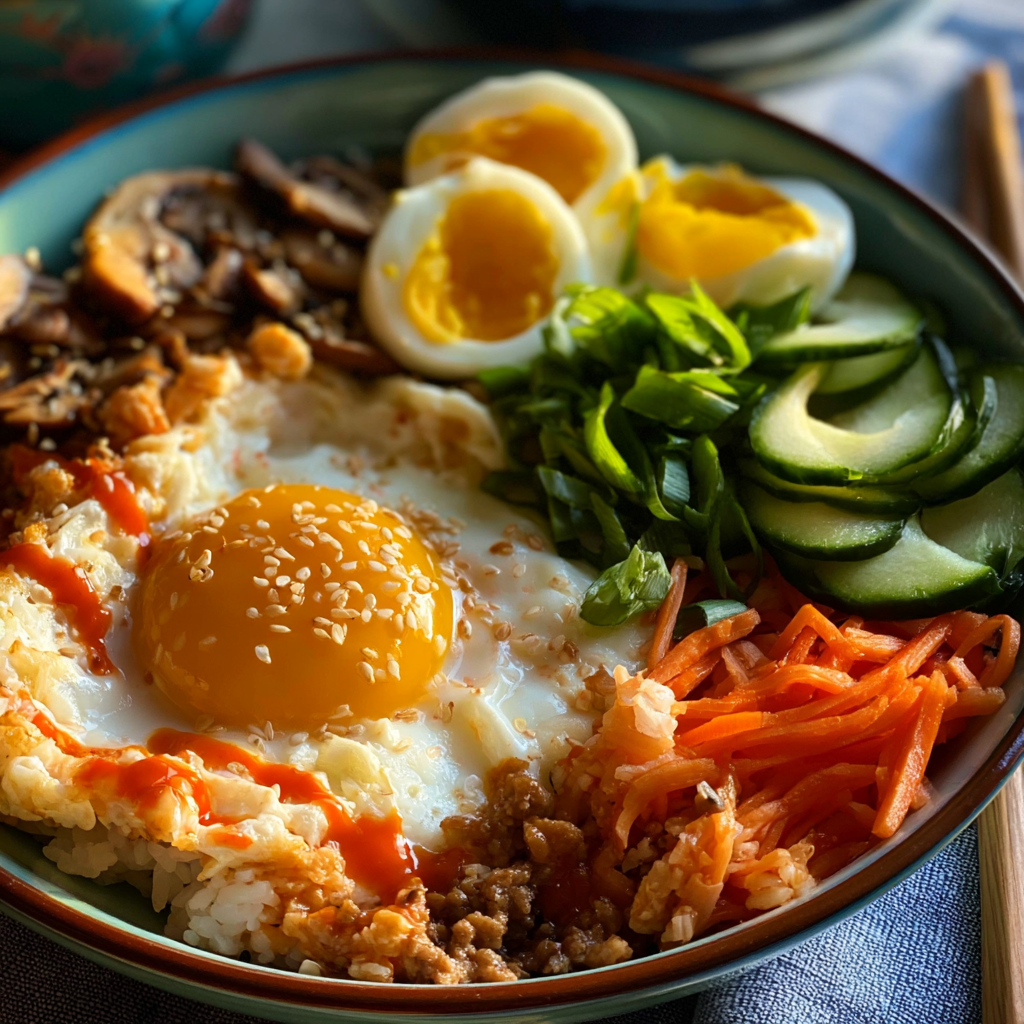
How to Make Easy Korean Bibimbap Recipe
Step 1: Cook the Rice
Begin by cooking your rice according to package instructions, aiming for fluffy but slightly sticky texture – this is the base that holds your bibimbap together beautifully.
Step 2: Prepare and Sauté Vegetables
Lightly sauté sliced zucchini, mushrooms, and shredded carrots separately with a splash of sesame oil and a pinch of salt. Blanch the spinach quickly, then season with garlic and sesame oil to bring out its vibrant green freshness.
Step 3: Cook the Protein
Brown your protein of choice in a pan with minced garlic and ginger, seasoning with soy sauce and a touch of sugar or honey to balance flavors. If using tofu, pan-fry until golden on all sides.
Step 4: Fry the Egg
Fry an egg sunny side up until the whites are set but the yolk remains runny – this acts as the perfect sauce when mixed into the bowl.
Step 5: Assemble the Bibimbap
In a wide bowl, place a scoop of rice, then artfully arrange the sautéed vegetables and protein in sections around the bowl. Top it all with the fried egg and a generous dollop of gochujang.
Step 6: Final Touches
Drizzle with a little more sesame oil and sprinkle toasted sesame seeds for extra flavor and garnish. Mix well before eating to enjoy every bite evenly.
Pro Tips for Making Easy Korean Bibimbap Recipe
- Use warm rice: This helps the flavors meld and makes mixing easier.
- Prep veggies separately: Cooking each vegetable on its own preserves unique textures and flavors.
- Don’t skip the gochujang: It’s the heart of bibimbap’s flavor and provides the delicious spicy-sweet punch.
- Control your spice: Mix gochujang with a little sesame oil or sugar if you want milder heat.
- Fresh ingredients count: Crisp and fresh vegetables elevate the dish’s taste and appearance.
How to Serve Easy Korean Bibimbap Recipe
Garnishes
Add a sprinkle of toasted sesame seeds and chopped green onions to finish the dish with extra crunch and vivid color, enhancing both taste and presentation.
Side Dishes
Pair with traditional Korean sides like kimchi, spicy cucumber salad, or a light miso soup for a complete and satisfying meal experience.
Creative Ways to Present
Serve bibimbap in individual stone bowls (dolsot) if you have one – it crisps the rice beautifully and keeps the dish warm longer, adding a delightful texture contrast to the meal.
Make Ahead and Storage
Storing Leftovers
Store any leftover bibimbap components separately in airtight containers to keep freshness, especially the vegetables and protein.
Freezing
While bibimbap is best fresh, cooked rice and sautéed veggies can be frozen separately for up to one month. Avoid freezing the egg and gochujang sauce to maintain texture and flavor.
Reheating
Reheat components gently in a pan or microwave, adding a splash of water or sesame oil to keep the rice moist. Reassemble the bowl and add a fresh fried egg before serving.
FAQs
What is bibimbap?
Bibimbap is a Korean rice dish topped with an array of sautéed vegetables, protein, egg, and gochujang sauce, all mixed together before eating.
Can I use brown rice instead of white rice?
Absolutely! Brown rice works well and adds extra fiber and nutrients to the dish while maintaining the classic bibimbap experience.
Is bibimbap spicy?
It can be! The level of spice comes mainly from the gochujang sauce, which you can control according to your preference.
Can I make this recipe vegan?
Yes! Use tofu or mushrooms instead of meat and skip the egg or substitute with a vegan egg alternative.
How long does bibimbap keep in the fridge?
Stored separately, the components can last for about 3-4 days, but it’s best enjoyed fresh for optimal texture and flavor.
Final Thoughts
This Easy Korean Bibimbap Recipe is one of those dishes that feels both exciting and comforting, vibrant and nourishing all at once. It’s beginner-friendly, quick to whip up, and endlessly customizable, making it a fantastic addition to your recipe collection. So gather your ingredients, get ready to mix and match those flavors, and treat yourself to a bowl of Korean magic that’s as beautiful as it is delicious. Happy cooking!
Related Posts
PrintEasy Korean Bibimbap Recipe

A vibrant and nourishing Korean Bibimbap recipe ready in under 30 minutes, featuring perfectly cooked rice, sautéed vegetables, savory protein, a fried egg, and a spicy-sweet gochujang sauce. This colorful and customizable dish balances health and flavor, making it perfect for quick weeknight dinners or adventurous home cooks seeking authentic Korean street food experience.
- Prep Time: 10 minutes
- Cook Time: 15 minutes
- Total Time: 25 minutes
- Yield: 2 servings 1x
- Category: Main Course
- Method: Sautéing
- Cuisine: Korean
- Diet: Gluten Free
Ingredients
Base
- 1 cup white or brown rice
Vegetables
- 1 cup fresh spinach (lightly blanched)
- 1 medium carrot, julienned or thinly sliced
- 1 small zucchini, sliced and sautéed
- 1 cup shiitake or button mushrooms, sliced and sautéed
Protein
- 200g ground beef, chicken, tofu, or mushrooms (your choice)
Aromatics & Sauces
- 2 cloves garlic, minced
- 1 teaspoon fresh ginger, minced
- 2 tablespoons soy sauce
- 1 tablespoon sesame oil (plus extra for drizzling)
- 2 teaspoons sugar or honey (optional, for balancing flavors)
- 2 tablespoons gochujang (Korean chili paste, adjust to taste)
Others
- 1 large egg (fried sunny side up)
- Toasted sesame seeds, for garnish
- Salt, to taste
Instructions
- Cook the Rice: Begin by cooking your rice according to package instructions, ensuring it turns out fluffy yet slightly sticky. This sticky texture helps the bibimbap hold together beautifully as the base of the dish.
- Prepare and Sauté Vegetables: Lightly sauté the sliced zucchini, mushrooms, and shredded carrots separately in a pan with a splash of sesame oil and a pinch of salt. Blanch the spinach quickly in boiling water, then drain and season with minced garlic and a drizzle of sesame oil to enhance its vibrant freshness.
- Cook the Protein: In a pan, brown your chosen protein with the minced garlic and ginger, seasoning with soy sauce and a touch of sugar or honey to balance the flavors. If using tofu, pan-fry it until golden on all sides for the best texture.
- Fry the Egg: Fry an egg sunny side up until the whites are fully set but the yolk remains runny. This runny yolk acts as a rich sauce when mixed through the bowl, binding the ingredients together.
- Assemble the Bibimbap: In a wide bowl, place a scoop of cooked rice as the foundation. Artfully arrange the sautéed vegetables and cooked protein in sections around the bowl. Place the fried egg on top and add a generous dollop of gochujang to deliver the signature spicy-sweet flavor.
- Final Touches: Drizzle a little extra sesame oil over the assembled bowl and sprinkle with toasted sesame seeds for added flavor and crunch. Mix all the ingredients well before eating to enjoy the full variety of tastes evenly.
Notes
- Use warm rice for easier mixing and better flavor melding.
- Cook each vegetable separately to preserve their individual textures and flavors.
- Don’t skip the gochujang — it’s essential for the authentic bibimbap taste.
- Adjust spice levels by mixing gochujang with sesame oil or sugar for milder heat.
- Fresh, crisp vegetables elevate both the taste and appearance of the dish.
Nutrition
- Serving Size: 1 bowl
- Calories: 450 kcal
- Sugar: 5 g
- Sodium: 700 mg
- Fat: 15 g
- Saturated Fat: 3.5 g
- Unsaturated Fat: 10 g
- Trans Fat: 0 g
- Carbohydrates: 55 g
- Fiber: 6 g
- Protein: 20 g
- Cholesterol: 185 mg
Keywords: Bibimbap, Korean cuisine, rice bowl, easy dinner, healthy meal, spicy, gochujang, vegetable bowl, customizable recipe